








Ultrafiltration vs Reverse Osmosis: Which Is Right for Industrial Water Treatment?
October 6, 2026
Ultrafiltration and reverse osmosis are both membrane filtration technologies, but they solve different water treatment problems. Ultrafiltration (UF) removes particles, colloids and microorganisms. Reverse osmosis (RO) also removes most dissolved salts.
The right choice depends on four things: your feedwater quality, the contaminants you need to remove, the product-water quality you need, and what happens downstream. Many industrial plants use both, with UF protecting an RO system.
This guide compares industrial ultrafiltration and industrial reverse osmosis on the criteria process engineers and plant managers use to select a system.
Ultrafiltration vs Reverse Osmosis: What’s the Difference?
The main difference is what passes through the membrane. Ultrafiltration lets dissolved salts through and holds back suspended solids, colloids, bacteria, viruses and large organic molecules. Reverse osmosis holds back those contaminants and most dissolved salts as well, leaving low-TDS water. TDS (total dissolved solids) is the concentration of salts, minerals and other substances dissolved in water.
The table below summarises how UF and RO compare. Figures are typical ranges, not design values.
| Factor | Ultrafiltration (UF) | Reverse Osmosis (RO) |
|---|---|---|
| Separation method | Size exclusion through physical pores | Diffusion through a dense polymer layer |
| Typical pore size | Up to about 0.1 µm (often 0.02–0.1 µm) | No conventional fixed pore size |
| Removes | Suspended solids, turbidity, colloids, bacteria, protozoa, many viruses, high-molecular-weight organics | All of these, plus most dissolved salts, hardness and most dissolved organics |
| Dissolved salts (TDS) | Not removed | Mostly removed |
| Operating pressure | Low, typically below 2 bar | About 5 bar (brackish water) to 55–70 bar (seawater) |
| Energy use | Lower | Higher |
| Waste stream | Backwash water with concentrated solids | Concentrate with elevated TDS |
| Typical recovery | Often more than 90%. High recovery, depending on system design and operating conditions. | Recovery varies depending on feedwater quality, salinity and scaling risk |
| Product water | Low turbidity and SDI, roughly the same TDS as feed | Low TDS and conductivity |
| Typical role | Clarification, pathogen barrier, RO pretreatment | Demineralisation, high-purity water |
What Is Ultrafiltration (UF)?
Ultrafiltration is a pressure-driven membrane filtration process that separates contaminants by size. Water and dissolved ions pass through the membrane pores, while larger particles and molecules are retained. UF pore sizes typically range up to about 0.1 micron (µm), and many industrial UF membranes are rated at around 0.02–0.1 µm.
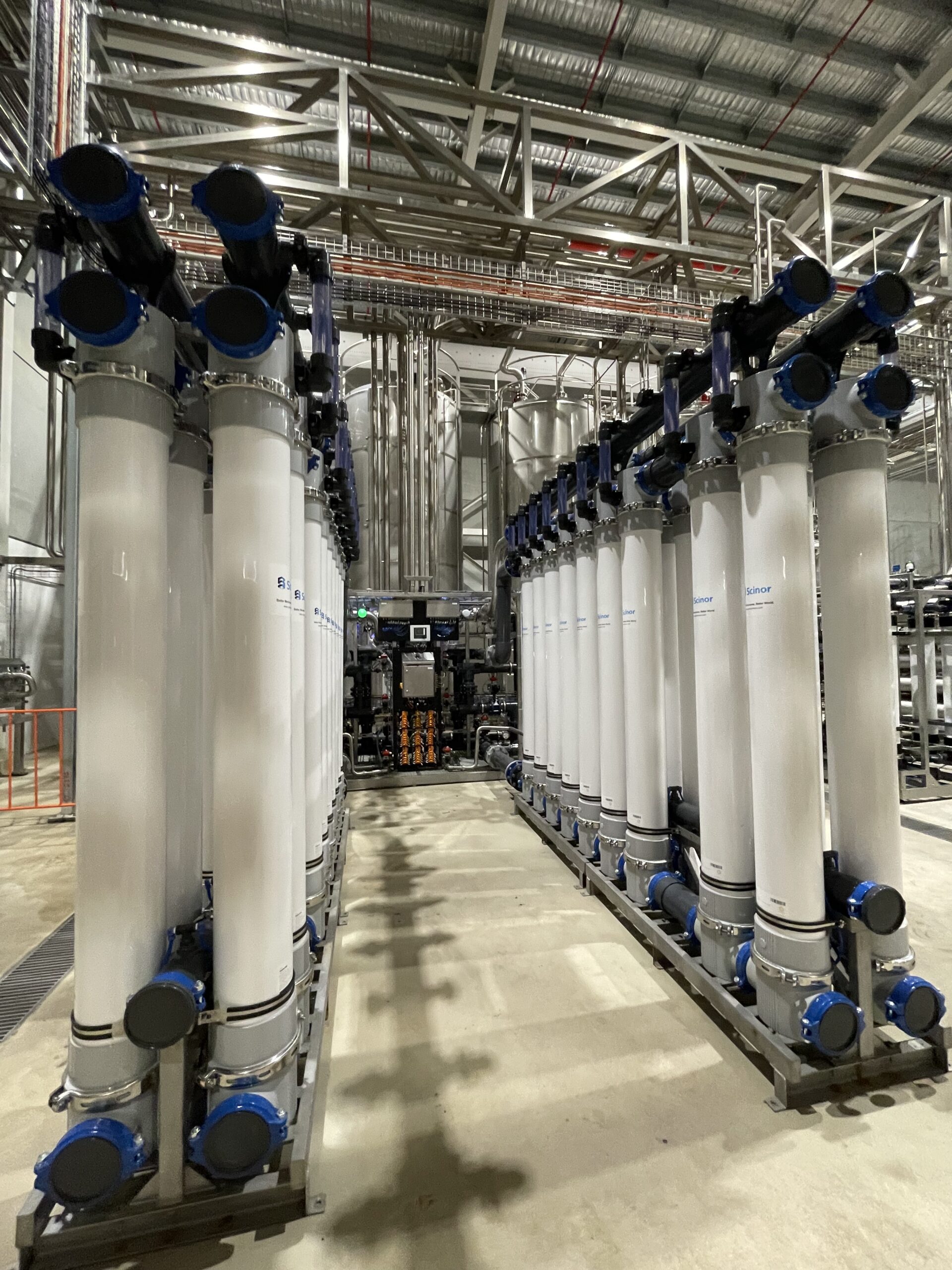
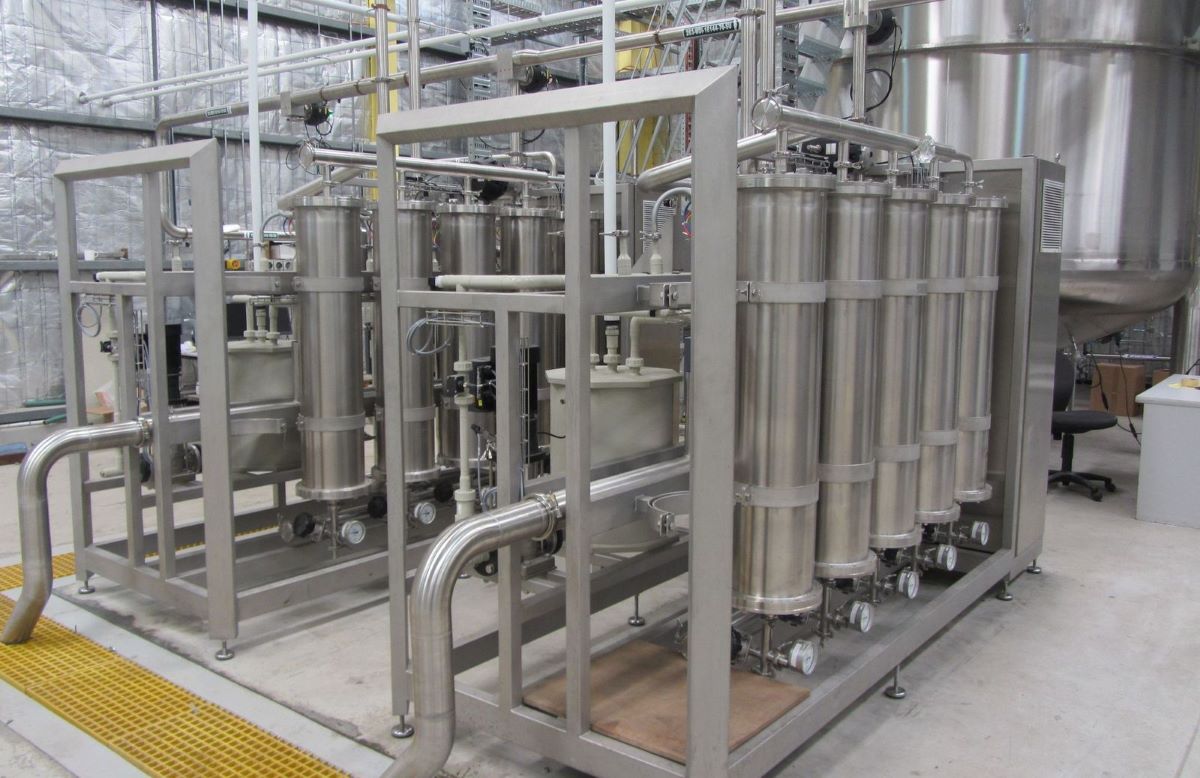
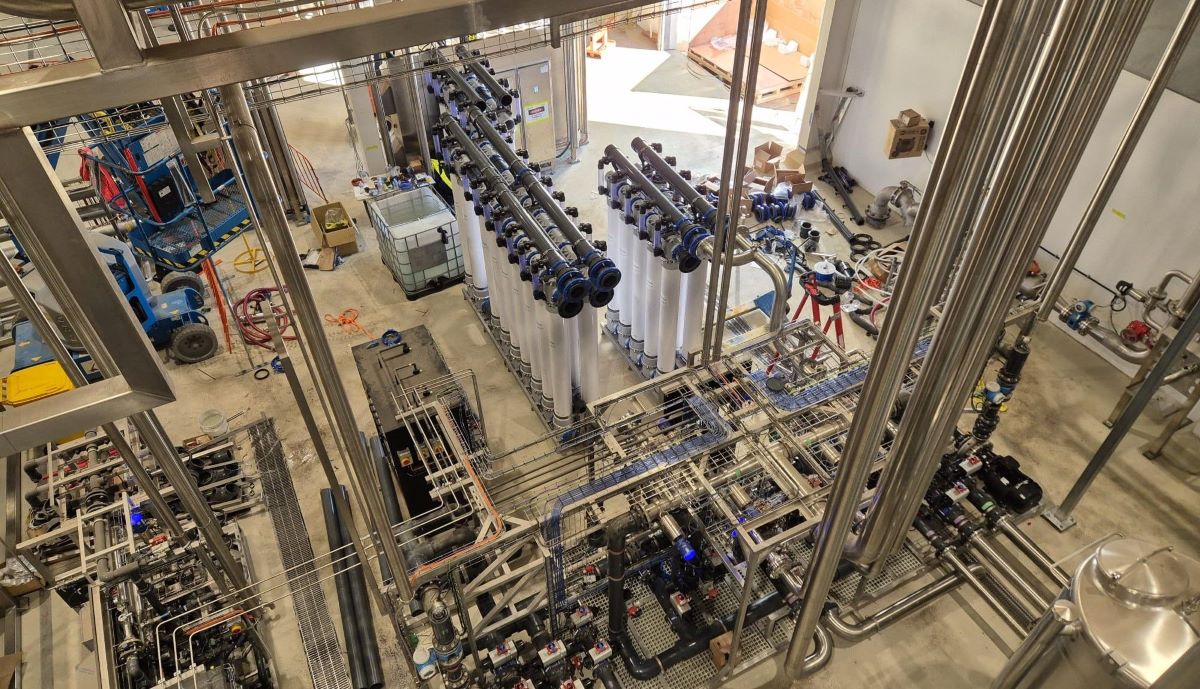
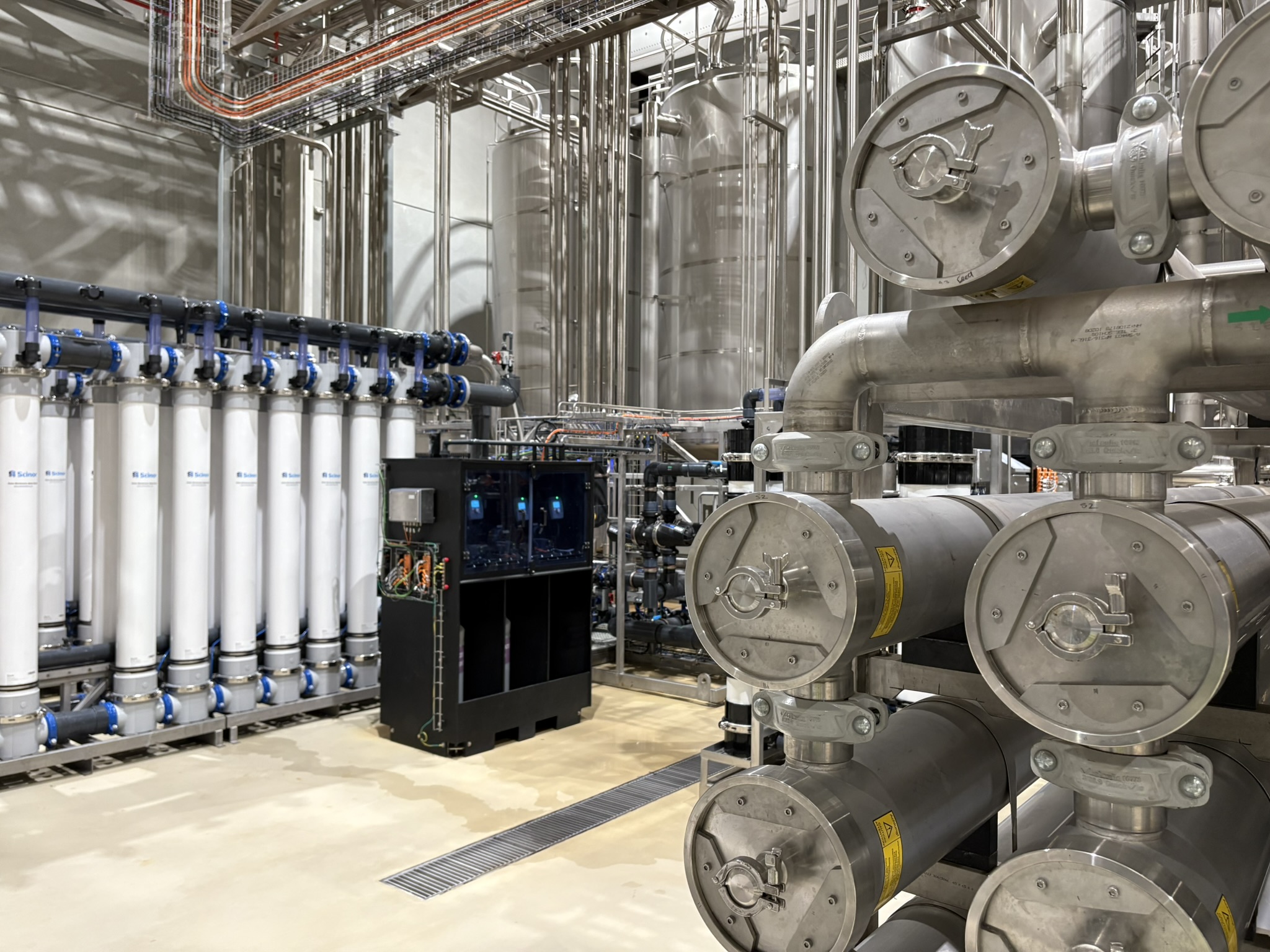
Most industrial UF systems use hollow-fibre membranes, often made from polyvinylidene fluoride (PVDF). The Scinor SMT600 ultrafiltration modules BHF supplies, for example, use PVDF membranes and are chlorine-tolerant. UF systems run filtration cycles broken up by backwashes, chemically enhanced backwashes (CEB) and periodic clean-in-place (CIP) to remove solids that build up on the membrane.
What Does Ultrafiltration Remove?
- Suspended solids and turbidity
- Colloids, such as colloidal iron, silica and clay
- Bacteria and protozoa, such as Cryptosporidium and Giardia
- Many viruses, depending on the membrane rating
- High-molecular-weight organics, such as proteins and some polymers
Ultrafiltration does not remove dissolved salts, hardness or most dissolved organics. UF filtrate has roughly the same TDS and conductivity as the feedwater.
Common Industrial Ultrafiltration Applications
- Process water – producing clear, low-microbial water for food and beverage, brewing and manufacturing
- Surface water and municipal treatment – replacing or upgrading conventional clarification and media filtration
- Wastewater reuse – polishing treated effluent or recovering backwash water
- RO pretreatment – protecting downstream RO membranes from particulate and colloidal fouling
In New Zealand, BHF replaced ageing microfiltration modules at a South Taranaki District Council (STDC) water treatment plant in Hawera with Scinor SMT600 UF modules, delivered as a turnkey project. The results?
- Reliable plant performance – All racks operating with consistent integrity, eliminating unplanned downtime due to leaks or failures.
- Improved staff efficiency – Operational staff no longer need to spend time pinning or repairing leaking modules, allowing focus on other core responsibilities.
- Ongoing plant optimisation – Recommendations from BHF audits, conducted during and after installation, have supported continuous process improvements and maximised plant performance.
Learn more about BHF ultrafiltration and microfiltration systems.
What Is Reverse Osmosis (RO)?
Reverse osmosis is a membrane process that uses pressure to force water through a semi-permeable membrane, leaving dissolved salts and other contaminants behind. The applied pressure must exceed the osmotic pressure of the feedwater, so saltier water needs higher pressure.
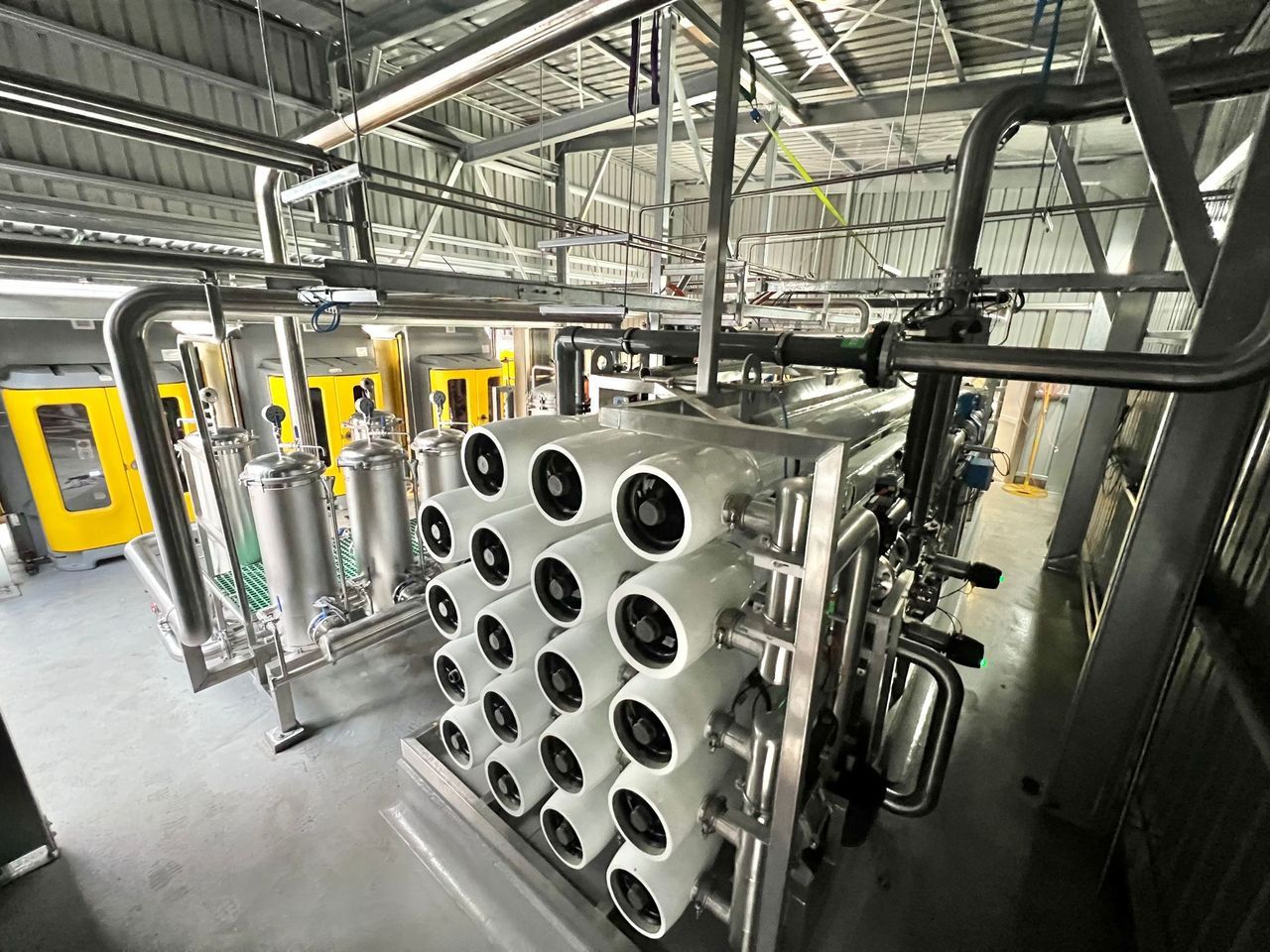
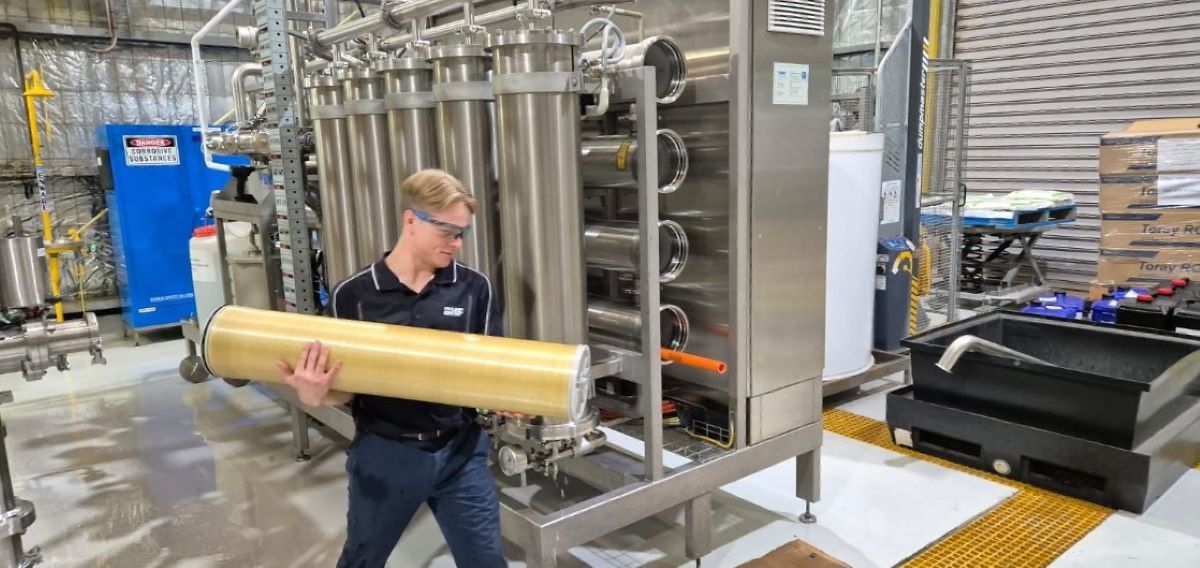
RO membranes do not work like a sieve with fixed pores. Most industrial RO systems use spiral-wound thin-film composite membranes with a dense polyamide layer, and water passes through by diffusion. The feed splits into two streams: permeate (the treated water) and concentrate, which carries the rejected salts.
What Does Reverse Osmosis Remove?
Reverse osmosis removes most dissolved salts and ions, including hardness, sodium, chloride, sulphate, nitrate and many metals. Thin-film composite (TFC) RO membranes also reject dissolved organics, microorganisms such as bacteria and viruses, pyrogens, particles and colloids.
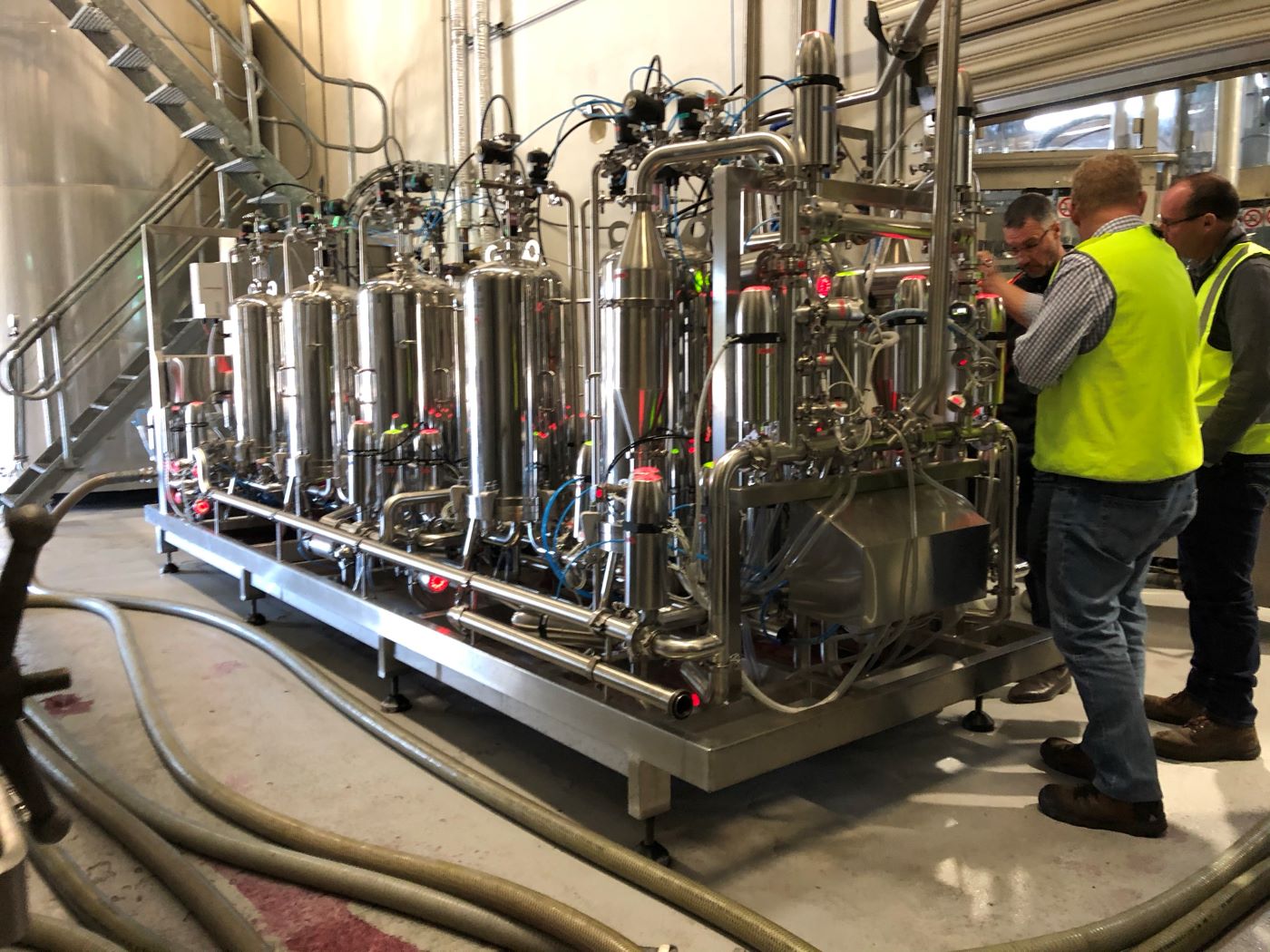
Rejection depends on the membrane, feed composition, temperature and system design. BHF’s TFC RO systems are designed for salt rejection above 98%. In the UF-RO plant BHF delivered for Frucor Suntory in Queensland, the Toray SUL-G20FTS heat-sanitisable membranes are rated at 99.5% nominal salt rejection under standard test conditions.
Reverse osmosis is less effective against dissolved gases such as carbon dioxide and small uncharged species such as boron. That’s why some high-purity systems add a second RO pass or a polishing stage.
Common Industrial Reverse Osmosis Applications
- Process and product water – low-TDS water for food and beverage, dairy and brewing
- Boiler and cooling tower feed – reducing scaling and blowdown
- Pharmaceutical and high-purity water – often combined with electrodeionisation (EDI) and UF, as in BHF’s Cold WFI systems
- Water recovery and reuse – reducing salinity so wastewater can be reused on site
- Remote or temporary supply – containerised RO for sites with limited footprint
Learn more about BHF reverse osmosis systems.
UF vs RO: Key Differences
UF and RO differ on six factors engineers weigh when selecting a system. Each depends on membrane design, feedwater and operating conditions, so treat the figures below as typical ranges, not design values.
Contaminants Removed
Ultrafiltration targets particles and large molecules: suspended solids, colloids, bacteria, viruses and macromolecules. Reverse osmosis targets dissolved contaminants, including salts, hardness and most dissolved organics, and removes particles and microorganisms too.
Membrane Pore Size and Separation
Ultrafiltration separates by size exclusion through physical pores, typically up to about 0.1 µm. Reverse osmosis has no conventional fixed pore size: water diffuses through a dense polymer layer that most dissolved ions cannot pass. Describing RO simply as a “finer UF” is misleading, because the separation mechanism is different.
Operating Pressure
Ultrafiltration runs at low transmembrane pressure, with most pressurised UF modules operating below 2 bar. Reverse osmosis needs enough pressure to overcome the feedwater’s osmotic pressure, so the required pressure rises with salinity: from about 5 bar for low-salinity brackish water to typically 55-70 bar for seawater.
Energy Requirements
Because RO runs at much higher pressure, its high-pressure pumps are usually the largest energy draw in a combined UF-RO plant. RO energy demand rises with feed salinity and recovery. UF energy use is mainly feed pumping, backwashing and air scour. Low-energy RO membranes and energy recovery devices can reduce RO energy use, depending on the application.
Water Recovery and Waste Streams
Recovery is the percentage of feedwater that becomes treated water. Both technologies produce a waste stream, but its volume and character differ:
- Ultrafiltration produces backwash water containing concentrated solids. Well-designed UF systems often recover more than 90% of feed; BHF’s UF plant at Victoria’s largest brewery operates at more than 95% water recovery.
- Reverse osmosis produces concentrate with elevated TDS. Brackish-water RO recovery is usually limited by scaling risk from salts such as calcium carbonate and silica, while seawater RO recovery is typically 40-50%. Staged designs can push brackish-water recovery higher: at Frucor Suntory, BHF’s RO plant feeds the main RO reject to a second recovery RO, reaching more than 90% system water recovery.
RO concentrate volume and disposal options can decide a project’s viability, particularly under trade waste or discharge consent limits.
Water Quality Produced
Ultrafiltration produces low-turbidity, low-SDI water with a physical barrier to pathogens, but with roughly the same TDS as the feed. Silt density index (SDI) is a test that measures how quickly fine particles in water foul a membrane filter. Reverse osmosis produces low-TDS, low-conductivity water suited to demineralisation and high-purity uses.
When Should You Choose Ultrafiltration?
Ultrafiltration is usually the better fit when the treatment objective is removing suspended solids, turbidity, colloids or microorganisms, and the dissolved-salt content of the feed is already acceptable. Typical cases include clarifying surface or bore water, producing process or rinse water with a reliable pathogen barrier, and recovering backwash or wastewater where TDS is not the limiting factor.
Chlorine-tolerant PVDF ultrafiltration can also simplify a treatment train. At Victoria’s largest brewery, BHF used a chlorine-tolerant Scinor UF membrane in place of an older chlorine-sensitive plant, removing the need for upstream carbon dechlorination and reducing footprint.
UF as Pretreatment for Reverse Osmosis
Ultrafiltration is widely used upstream of RO to reduce particulate and colloidal loading on the RO membranes. RO membrane manufacturers typically set feed limits such as a maximum turbidity of 1 NTU and a maximum 15-minute SDI of 5, and a lower SDI is often preferred. A well-operated UF system can typically produce filtrate within these limits, depending on feed characteristics.
In a BHF wastewater project, custom depth filtration ahead of UF helped maintain post-UF SDI below the target of 3 for the downstream RO plant. Compared with conventional media filtration, UF pretreatment can reduce RO cleaning frequency and extend membrane life, though results depend on feed quality and system design.
When Should You Choose Reverse Osmosis?
Reverse osmosis is the right choice when the process needs a substantial reduction in dissolved salts, conductivity or specific dissolved contaminants. Typical triggers include a TDS or conductivity limit in the product specification, brackish or saline feedwater, boiler or cooling tower feed, pharmaceutical water, and water reuse where salinity would otherwise build up.
RO rarely runs without pretreatment. Polyamide RO membranes typically tolerate less than 0.1 ppm of free chlorine, and they foul quickly if particles, scale-forming salts or biological growth reach them. Budget for pretreatment and concentrate management from the start.
Can Ultrafiltration and Reverse Osmosis Be Used Together?
Yes. UF and RO are often complementary rather than competing technologies. Where the feed is variable or high in solids and the process still needs low-TDS water, a combined UF-RO train uses each membrane for what it does best.
A typical industrial treatment train runs in this order:
- Screening or strainers to remove coarse debris
- Ultrafiltration to remove suspended solids, colloids and microorganisms
- Dechlorination (if chlorine is used upstream) and antiscalant dosing
- Cartridge filtration as a final guard
- Reverse osmosis to remove dissolved salts
- Post-treatment as needed, such as remineralisation, pH correction, UV or EDI polishing
Key Factors When Choosing Between UF and RO
The selection works best in a fixed order: define the product-water specification, characterise the feed, then size and cost the options over their whole life.
Feedwater Quality
Feedwater characteristics decide both the technology and the pretreatment. Turbidity, suspended solids and SDI indicate particulate fouling risk. TDS, hardness, silica, iron and manganese indicate whether RO is needed and how far recovery can go before scaling. Total organic carbon (TOC) and biological activity indicate organic and biofouling risk.
Sample across seasons and operating conditions. Surface water and industrial wastewater change far more than bore water, and a design based on one good sample will struggle in the worst month.
Required Product-Water Quality
Define the output specification before choosing UF, RO or both. If the specification sets limits only on turbidity and microbial quality, UF may be enough. If it sets limits on TDS, conductivity, hardness or specific ions, you need RO. In New Zealand, drinking water applications must also meet the Drinking Water Standards and Quality Assurance Rules set by the Water Services Authority – Taumata Arowai.
Flow Rate and Plant Capacity
Size for average and peak demand, and for future growth. Membrane systems are modular, so extra racks or vessels can be added later if space, pipework and controls are allowed for at design stage. Cold feedwater reduces membrane output, so size on the lowest expected temperature, which matters for many New Zealand surface water sources.
Operating and Lifecycle Cost
Compare options on lifecycle cost, not capital cost alone. Include energy, cleaning chemicals, membrane replacement, pretreatment consumables, water lost to backwash or concentrate, maintenance labour and waste handling. RO usually costs more to run than UF because of pressure, pretreatment and concentrate management, but it is the only option of the two that meets a dissolved-solids specification.
Maintenance and Fouling Risk
Fouling drives cleaning frequency, downtime and membrane life. UF handles high solids loads through backwashing and air scour, but organics and some colloids can still cause irreversible fouling. RO is more sensitive: scaling, biofouling and chlorine damage can shorten membrane life quickly without effective pretreatment, monitoring and CIP. Remote monitoring and normalised performance data help catch problems early.
Common Mistakes When Selecting UF or RO
- Selecting the technology before analysing the feedwater. A full, balanced water analysis across operating conditions should come first. Without it, both technology choice and pretreatment design are guesses.
- Assuming UF removes dissolved salts. Ultrafiltration does not reduce TDS, hardness or conductivity. If the specification includes any of these, UF alone will not meet it.
- Using RO where only particulate removal is needed. Reverse osmosis uses more energy, needs more pretreatment and produces a concentrate stream. If the specification has no dissolved-solids limit, UF may do the job more simply.
- Ignoring RO pretreatment. Most RO fouling problems start upstream. Under-designed pretreatment leads to frequent cleaning, lost production and early membrane replacement.
- Undersizing the system. Sizing on average flow, warm-water output or a single optimistic sample leaves no margin for peaks, cold months or fouling between cleans.
- Comparing only upfront cost. Energy, chemicals, membranes, downtime and waste handling over the plant’s life usually outweigh the difference in capital cost.
Conclusion
Ultrafiltration and reverse osmosis solve different water treatment problems. UF is selected for turbidity, particulate, colloidal and microbial control. RO is selected when the process needs a substantial reduction in dissolved solids. Many industrial plants use both, with UF protecting RO. Let the feedwater analysis and the required product-water quality drive the decision, then compare options on lifecycle cost.
Contact Our BHF Team
If you are assessing membrane filtration for a new or existing plant in New Zealand, talk to BHF about your feedwater data and treatment objectives.
Frequently Asked Questions
Ultrafiltration removes particles, colloids and microorganisms but lets dissolved salts pass. Reverse osmosis removes most dissolved salts as well, producing low-TDS water.
Neither is better overall. Ultrafiltration is better suited to particulate and microbial control at low pressure. Reverse osmosis is needed when dissolved salts must be reduced.
No. Ultrafiltration pores are far larger than dissolved ions, so UF filtrate has roughly the same TDS and conductivity as the feed.
Yes, reverse osmosis removes a wider range, including dissolved salts and most dissolved organics. That wider removal comes with higher pressure, more pretreatment and a concentrate stream to manage.
Yes. Ultrafiltration is a common RO pretreatment step because it produces low-turbidity, low-SDI feedwater that reduces particulate and colloidal fouling of RO membranes.
Reverse osmosis is usually more expensive to operate because of higher pressure, pretreatment chemicals and concentrate management. Actual costs depend on feed quality, required output, recovery, and local energy and disposal costs.